
How to Dial in Espresso Like a Pro
Dialing in espresso isn’t optional if you want consistent shots. The same beans, same machine, same recipe can taste sour one day and bitter the next — and the only thing that fixes it is methodically adjusting grind, dose, and time. Here’s how I dial in every new bag, and how I’d teach anyone starting out. The process is repeatable, the math is simple, and after a few rounds it stops feeling like guesswork. I dial in shots on a Barista Express almost daily; my Breville Barista Express review has the full setup. If you’re still learning the machine itself, my complete espresso machine guide covers the basics first.
This post contains affiliate links. Purchases made through these links support my research and writing at no extra cost to you. Thank you for your support! Please read my Disclosure for more details.
Dialing in espresso was the single hardest skill I had to learn as a home barista. The first month, every shot was either sour, bitter, or both. Once a few key variables clicked, the routine became second nature — and that’s what I want to share here.
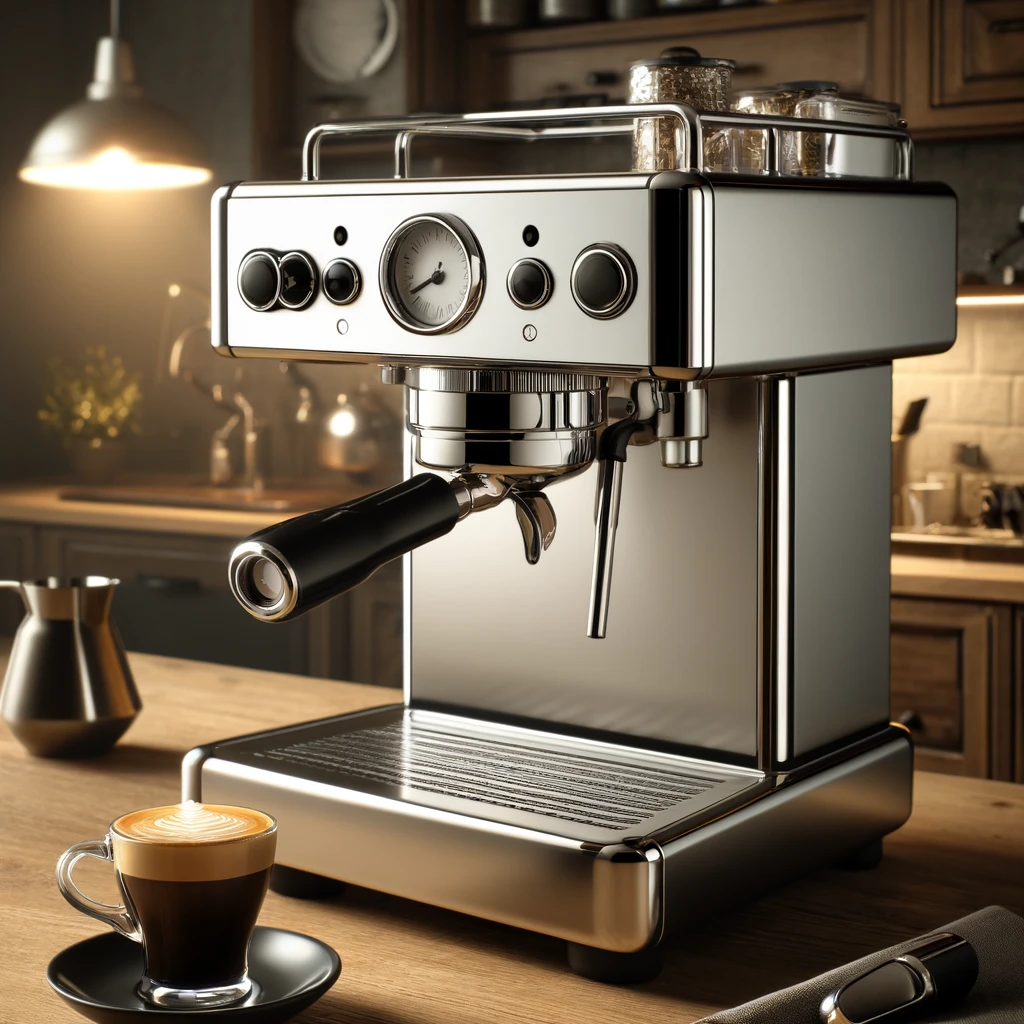
Why Dialing in Espresso Matters
I used to think a good espresso machine made good espresso. Wrong. After three years of pulling shots at home, the truth is simpler: the machine matters less than the dialing. Same beans, same machine, same hands — but a 2-second difference in extraction can take a shot from bright and sweet to dishwater bitter.
Most home baristas skip this part. They buy a high-end machine, pull a shot, taste something off, and blame the beans. Then they keep pulling the same bad shot for months. Dialing in is the loop that breaks that pattern — small adjustments, measurable feedback, better coffee every morning. Skip it and you waste beans. Get good at it and your home espresso starts beating most café shots in your city.
The Four Variables You Actually Control
Forget the marketing fluff — espresso comes down to four things you can measure and tweak. Grind size sets the pace of extraction: finer grinds slow it down, coarser grinds speed it up. Dose is how much coffee goes into the portafilter (16–20g for a standard double, and you need a precision scale to nail it, not the integrated machine display which is usually off by 1–2g).
Extraction time is the seconds between the pump starting and you stopping the shot — almost always 25–30 seconds for a balanced cup. And brew ratio is the relationship between dose in and espresso out, usually 1:2 (18g in → 36g out). Those four numbers are the language of espresso. Once you speak them fluently, every shot becomes a controlled experiment instead of a guessing game.
My Six-Step Process for Dialing In a New Bag of Beans
This is the exact routine I run every time a fresh bag of beans hits the kitchen. It takes about three shots to land on a good recipe, and the whole thing fits in 15 minutes if you have your gear ready.
Step 1 — Start with Fresh Beans (and check the roast date)
If your beans are more than 4 weeks past their roast date, dialing in becomes a nightmare. The beans degas progressively, which changes how the puck behaves under pressure. I aim for beans roasted 7–21 days ago — past the initial CO2 dump, before the staling really kicks in. Store them in an airtight container, dark place, never the fridge (full guide on bean storage here).
Step 2 — Lock in a Baseline Recipe
Start with the universal espresso baseline: 18g in, 36g out, 25–30 seconds. This is where you begin every single time, no matter the bean. From this anchor, you adjust based on what you taste — but you need the anchor first, otherwise you’re chasing four variables at once and you’ll never know what moved.
Step 3 — Weigh, Grind, Distribute, Tamp
Weigh exactly 18g of whole beans into your grinder‘s hopper or single-dose cup. Grind straight into the portafilter. Then distribute — I use a Normcore WDT tool (check current price on Amazon) to break up clumps and even out the bed. This step prevents channeling, which is the single biggest cause of uneven extraction. I dial in espresso at home with my 1Zpresso K-Ultra for travel days when the big grinder stays home.
Finally, tamp with 15–20 lb of even pressure. I use the Normcore self-leveling tamper — it stops automatically when you hit the right pressure, so every tamp is identical. Sounds gimmicky until you realize how much your shots improve when you eliminate the human variable.
Step 4 — Pull the Test Shot
Lock the portafilter in, start your timer the moment you start the pump. Stop when the cup hits 36g. Note the time. That’s your data point. If you used a Timemore Black Mirror scale with a built-in timer (0.1g precision — my daily scale), this is one motion — set the cup on the scale, hit tare, the timer auto-starts the moment water flows. No more juggling a phone timer.
Step 5 — Taste First, Then Adjust
This is where most people mess up. Don’t adjust based only on the timer — taste the shot. Sour, thin, watery? You’re under-extracted. Grind finer or bump the dose by 0.5g. Bitter, dry, hollow? Over-extracted. Grind coarser or drop the dose by 0.5g. The timer is a guide, not the verdict — your tongue is.
Espresso Dial-In Helper
Enter your last shot. Get the one adjustment to make next.
Targets follow the same ranges used in our espresso troubleshooting guide: a 1:2 ratio pulled in 25–30 seconds. Treat them as a starting point, not a rule — beans, roast date and machine all shift the window.
Step 6 — Record What Worked
Write down the bean, the roast date, the grinder setting, the dose, the yield, the time. Take 30 seconds. Future-you will thank present-you when you reorder the same bag in a month and don't have to redial from scratch.

Three Mistakes That Slow Down Your Dialing
These are the ones I made for almost a year before catching them. Save yourself the time.
Changing two variables at once. If your shot is sour AND running fast, the temptation is to grind finer AND lower the dose. Don't. Change one thing, pull a shot, see what happened. Otherwise you'll never learn what each variable actually does.
Not purging the grinder between adjustments. When you shift the grinder setting, the first 2–3 grams of coffee out are still the old grind. Run a small purge into a separate cup before your real dose, otherwise your "new" shot is actually 70% the old grind.
Pulling shots on a cold machine. Most home espresso machines need 15–25 minutes of warmup before the group head is at temperature. Pull a shot at 5 minutes and your numbers won't match a properly heated machine — you'll chase ghosts.
The Gear That Made the Biggest Difference for Me
You don't need around $3,000 setup to dial in well. But three pieces of gear punch way above their price tag and changed how my shots came out within a week. The machine itself matters less than these three — assuming your machine has decent temperature stability and at least 9 bars of pressure.
If you're starting from scratch with no machine, the Breville Barista Express is the entry I recommend almost every time — built-in grinder, around $690 on Amazon, and it produces café-grade shots once you've dialed it in. It's the machine I use daily.
Check the Breville Barista Express on Amazon →
For the three accessories that actually moved the needle for me — a precision scale, a self-leveling tamper, and a WDT distribution tool — you can find each one linked inline above in the relevant steps. A complete set is mid-range investment — worth every dollar. Trying to dial in without them is like cooking without a thermometer.
If you want a deeper dive into pairing gear with your machine, see my full espresso accessories guide and machine maintenance routine.
Dialing in is much easier on a machine with built-in PID temperature control. For our top pick at this price point, see the Breville Barista Express review — the machine I use to test most dial-in recipes.
If you're trying to budget your daily caffeine, check the exact amount per shot: how much caffeine in an espresso shot — including breakdowns by drink and brew method.
Once you've dialed in your espresso, try it in a cortado — a 1:1 espresso-to-milk drink from Spain that's quickly becoming the favorite afternoon coffee of home baristas. Read my full cortado coffee recipe.
Dialing In Espresso FAQ
What's the ideal espresso extraction time?
25–30 seconds for a double shot. If your shot is outside that range, adjust grind size before anything else.
How do I know if my espresso is over-extracted?
Bitter, dry, astringent on the tongue. Dark color, slow drip out of the spouts. Fix: coarser grind or lower dose by 0.5g.
What's a good starting brew ratio?
1:2 — 18g in, 36g out. It's the universal espresso baseline. Adjust to taste once you've nailed the timing.
How often should I dial in?
Every new bag of coffee. Then small daily adjustments as the beans age — they get easier to extract over the first 2 weeks post-roast, then progressively harder.
Why does my shot pull unevenly?
Channeling — water finds the path of least resistance through your puck. Caused by uneven tamping or poor distribution. A WDT tool fixes 80% of channeling issues.
What does dialing in espresso mean?
Dialing in espresso means adjusting your grind size, dose, and extraction time to achieve a balanced shot. The goal is a 25–30 second extraction for a 1:2 ratio (e.g., 18g in, 36g out). too fast means the grind is too coarse; too slow means it's too fine.
How do I fix sour espresso?
Sour espresso is under-extracted. To fix it: grind finer to slow down the shot, increase your dose slightly, or raise your brew temperature. Aim for a 25–30 second extraction. A coarser grind or low temperature are the most common causes of sourness.
How do I fix bitter espresso?
Bitter espresso is over-extracted. Grind coarser to speed up the shot, reduce your dose, or lower the brew temperature. If your shot runs longer than 35 seconds, that's your main problem. Also check that your portafilter basket isn't overfilled.
How long should an espresso shot take?
A well-dialed espresso shot should take 25–30 seconds from the moment you start the pump, yielding approximately double the dry dose weight in liquid (1:2 ratio). A 18g dose should produce around 36g of espresso.
Espresso Dial-In Troubleshooting Chart
Use this quick diagnostic to fix a shot without guessing. Change one variable at a time:
| Symptom | What it means | Fix |
|---|---|---|
| Shot runs too fast (under 20s), thin | Under-extracted, grind too coarse | Grind finer; aim for 25–30s |
| Shot runs too slow (over 35s), bitter | Over-extracted, grind too fine | Grind coarser; reduce dose slightly |
| Sour / sharp taste | Under-extracted | Grind finer or raise temperature |
| Bitter / harsh taste | Over-extracted | Grind coarser or lower temperature |
| No crema / pale | Stale beans or grind too coarse | Use fresh beans; grind finer |
| Channeling / squirting | Uneven puck prep | Distribute + tamp level; use a WDT tool |
The Dial-In Process at a Glance
- Start with a 1:2 ratio — 18 g in, 36 g out.
- Target a 25–30 second shot time.
- Too fast or sour? Grind finer.
- Too slow or bitter? Grind coarser.
- Change one variable at a time and taste after each.
🔒 100% free · No credit card · Unsubscribe anytime
Final Thoughts
For a complete overview of all coffee brewing methods — from drip and pour-over to siphon, Turkish, and Vietnamese phin — see my full brewing guide.
Dialing in espresso is the difference between owning an expensive machine and actually pulling shots that justify it. The process is methodical, not artistic — measure, taste, adjust one variable, repeat. After your third or fourth bag of beans, the loop becomes second nature. Then you'll wonder how you ever pulled shots without a scale.